Vision Mission PEO

Vision

To be recognized as one of the best instrumentation engineering programs by developing globally competent engineers, researchers and entrepreneurs to solve real life problems through skill-based education.

Mission

M1: To promote learning for skill-based education and emerging technologies to make students globally competent.
M2: To create conducive environment for research, innovations and entrepreneurship.

Program Educational Objectives (PEOs)

1. Solve real life problems by applying the knowledge of instrumentation technology.
2. Pursue higher education or be researcher or be entrepreneur.
3. Contribute as a socially responsible citizen for the development of nation.

Program Specific Outcomes (PSOs)

1. Graduates will be able to apply their knowledge of measurement and control to solve the problems related to environment, safety, health and agriculture sectors.
2. Graduates will be able to demonstrate their skills on Programmable logic controller, Lab-view, Distributed control system and Internet of thing.

Program Outcomes (POs)

SECOND YEAR (Semester III)
SUBJECT: Sensors and Transducers
Course Outcomes: Students will be able to
C301.1 Choose proper sensor comparing different standards and guidelines to make sensitive measurements of physical parameters like pressure, flow, acceleration, etc
C301.2 Understand correctly the expected performance of various sensors
C301.3 List and locate different type of sensors used in real life applications and paraphrase their importance
C301.4 Outline and Use the concepts in common methods for converting a physical parameter into an electrical quantity.
C301.5 Classify and explain with examples of transducers, including those for measurement of temperature, strain, motion, position and light
C301.6 Develop professional skills in acquiring and applying the knowledge outside the classroom through design of a real-life instrumentation system
SUBJECT: Electrical Measurement and Instrumentation
Course Outcomes: Students will be able to
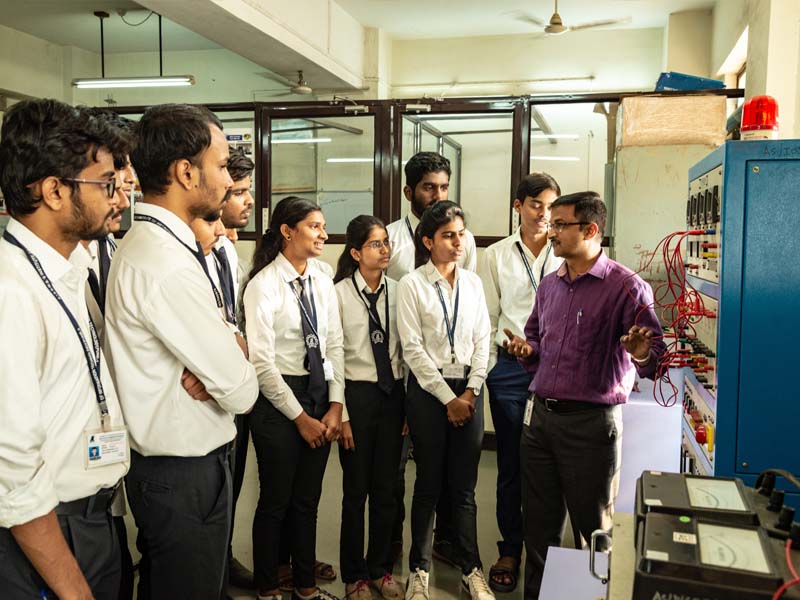
C302.1 define static and dynamic characteristics to indicate the performance of instruments.
C302.2 Calculate the values of resistances for design of multirange ammeter, voltmeter and ohmmeter
C302.3 Describe the construction, working, and applications of CRO for voltage measurement and frequency determination using Lissajous and Z-modulation techniques
C302.4 Determine the values of unknown resistance, inductance and capacitance by DC and AC bridge circuits.
C302.5 Explain types of ADCs and DACs to be used in digital instrumentation systems.
C302.6 Describe types of graphical recorders and its applications in measurement.
SUBJECT: Analog and Digital Techniques
Course Outcomes: Students will be able to
C303.1 State op-amp characteristics and configurations.
C303.2 Design various linear and nonlinear circuits using general purpose op-amp IC.
C303.3 Describe operation and designing of circuits using special purpose timer IC and voltage regulator IC.
C303.4 Explain working of various combinational logic circuits.
C303.5 Describe Conversion of one type of flip- flop to another type.
C303.6 Compare different types of counter circuits
SUBJECT: Data Science
Course Outcomes: Students will be able to
C304.1 Demonstrate statistics for data analysis.
C304.2 Describe data preparation stage.
C304.3 Identify trends and relationships between variables.
C304.4 Demonstrate data cleaning methods.
C304.5 Demonstrate variable and feature transformation.
C304.6 Create data visualization desktop.
SUBJECT: Sensors and Transducers Lab
Course Outcomes: Students will be able to
C307.1 Test various characteristics operations of LVDT and Load cell.
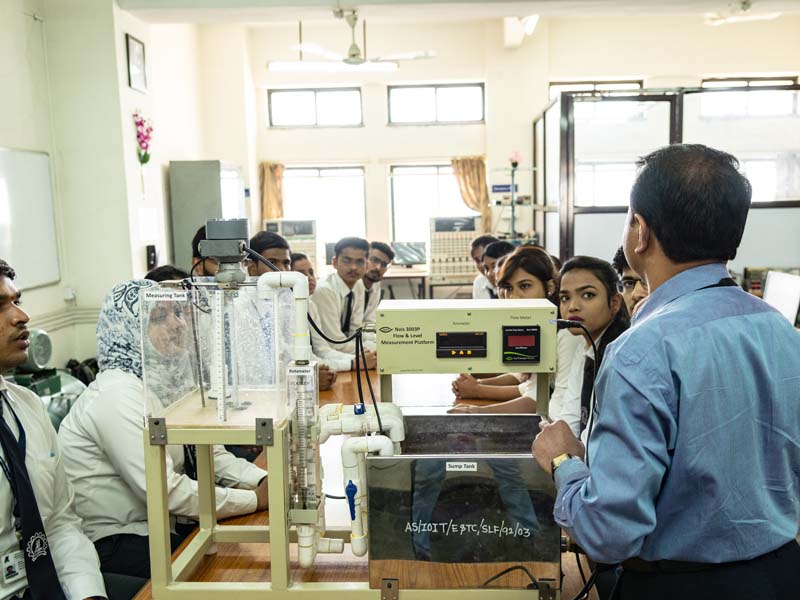
C307.2 Understand different applications of flow measurement.
C307.3 Develop program code by selection of proper data structure using python language.
C307.4 Solve through software simulation on various characteristics of sensor.
C307.5 Identify the proper methods and instrument for temperature measurement
C307.6 Understand the working on different open source and virtual instrument platform
SUBJECT: Electrical Measurements and Instrumentation Lab
Course Outcomes: Students will be able to
C308.1 explain the effect of loading in electrical measurements and its impact on measurement accuracy
C308.2 Calculate suitable resistance values for designing multirange ammeter, voltmeter, and ohmmeter circuits.
C308.3 apply CRO for measurement of magnitude and frequency of unknown signal by Y-t, lissajous and Z-modulation techniques.
C308.4 determine the value unknown resistance using wheatston’s bridge.
C308.5 measure live current in wire digital clamp meter.
C308.6 describe the basic principles, types, and applications of strip chart and X–Y recorders.”
SUBJECT: Analog and Digital Techniques Lab
Course Outcomes: Students will be able to
C309.1 Design and implement circuits for measurement of characteristics of op-amp IC.
C309.2 Design and implement various linear and nonlinear circuits using different ICs.
C309.3 Apply variable reduction techniques in the design of digital logic circuits.
C309.4 Design and test digital circuits.
SUBJACT: Data Science Lab
Course Outcomes: Students will be able to
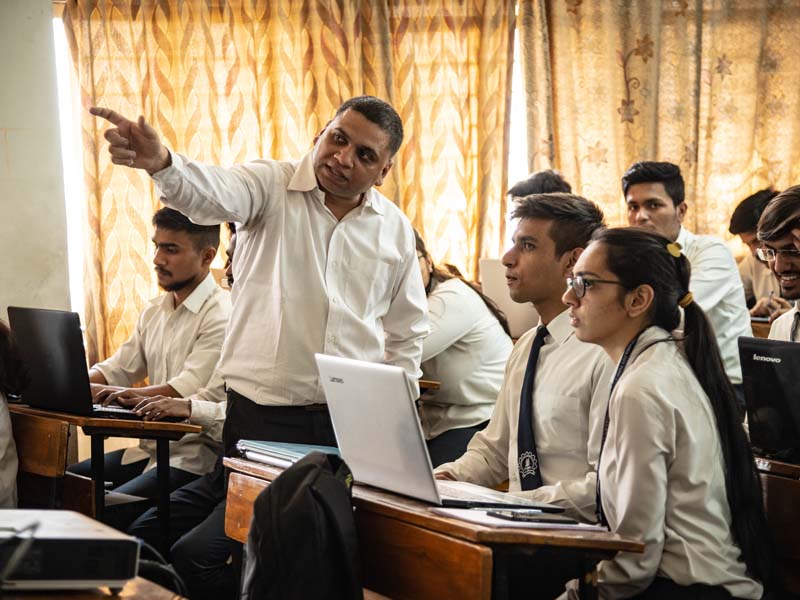
C310.1 Demonstrate statistics for data analysis.
C310.2 Demonstrate data science packages.
C310.3 Demonstrate data cleaning methods.
C310.4 Create data visualization desktop.
SECOND YEAR (Semester IV)
SUBJECT: Industrial Organization and Management
Course Outcomes: Students will be able to
C401.1 Evaluate the role and responsibilities organization.
C401.2 Apply the documents / activities required for the quality.
C401.3 Identify the tools of Planning and scheduling .
C401.4 Classify the standards required  for industry development .
C401.5 Classify the different types of budget & implement the balance sheet.
C401.6 Interpret the information related to business and professional ethics.
SUBJECT: Process Control Loop Components
Course Outcomes: Students will be able to
C402.1 Prepare process control loop using standard symbols and identify process variables.
C402.2 Describe application of DPT for flow and level measurement.
C402.3 Explain control system parameters and different modes of controller
C402.4 Calculate PID parameters to tune PID controller by Z-N methods.
C402.5 Determine control valve coefficient and valve size for different characteristics.
C402.6 Describe different types of control valves and accessories to improve its response.
SUBJECT: Control System
Course Outcomes: Students will be able to
C403.1 Explain concept of control system, its type, Laplace transform.
C403.2 Model electrical, mechanical systems.
C403.3 Determine overall transfer function of system using  block diagram and signal flow graph techniques.
C403.4 Compute time domain specifications of LTI system
C403.5 Determine stability of system using Routh Criteria and Root locus.
C403.6 Determine stability of system infrequency domain using polar plot and bode plot.
SUBJECT: Embedded System Design
Course Outcomes: Students will be able to
C404.1 Explain the architecture of 8051 microcontroller.
C404.2 Illustrate the execution of instructions in assembly and embedded c programming language.
C404.3 Demonstrate the timers and serial communication programs.
C404.4 Model the various interfacing peripherals to the 8051 microcontroller.
C404.5  Develop a project based on Raspberry Pi Platform and Arduino.
C404.6 Develop a project based on 8 bit MCU / Raspberry Pi .
SUBJECT: Machine Learning
Course Outcomes: Students will be able to
C405.1 Describe different types of machine leaning and its life cycle.
C405.2 Differentiate various regression techniques and evaluate their performance.
C405.3 Illustrate probabilistic machine learning algorithms.
C405.4 Compare different types of classification models and their relevant application.
C405.5 Explain the tree-based machine learning algorithms.
C405.6 Apply unsupervised machine learning clustering algorithm.
SUBJECT: PLC Programming
Course Outcomes: Students will be able to
C406.1 Understand PLC architecture, wiring, and industrial applications.
C406.2 Develop and implement ladder logic for basic and advanced control systems.
C406.3 Design motor control circuits with safety interlocks using PLC.
C406.4 Apply timers, counters, and arithmetic instructions in real-time control applications.
C406.5 Analyze and implement industrial automation problems using PLC logic.
C406.6 Interface PLC with SCADA systems for monitoring and control.
SUBJECT: Process Control Loop Components Lab
Course Outcomes: Students will be able to
C408.1 measure flow rate and level by Differential Pressure Transmitter (DPT).
C408.2 calibrate and verify the input–output characteristics of the converters.
C408.3 implement On –Off control action to maintain a process variable within set limits.
C408.4 demonstrate the PID controller modes to improve the performance of a closed-loop control system.
C408.5 implement Z-N closed loop tuning method to achieve stable and desired closed-loop performance.
C408.6 verify quick opening, linear and equal %age characteristics of pneumatic control valve.
SUBJECT: Embedded System Design Lab
Course Outcomes: Students will be able to
C409.1 Infer the various addressing modes.
C409.2 Demonstrate arithmetic and logical operations.
C409.3 Demonstrate the timers and serial communication programs.
C409.4 Model the various interfacing peripherals to the 8051 microcontroller.
C409.5  Develop a project based on Raspberry Pi Platform and Arduino.
C409.6 Analyze the embedded system.
SUBJECT: Machine Learning Lab
Course Outcomes: Students will be able to
C410.1 Implement different supervised and unsupervised machine learning algorithms.
C410.2 Evaluate performance of machine learning algorithms for real-world applications.
SUBJECT: Project Based Learning Lab
Course Outcomes: Students will be able to
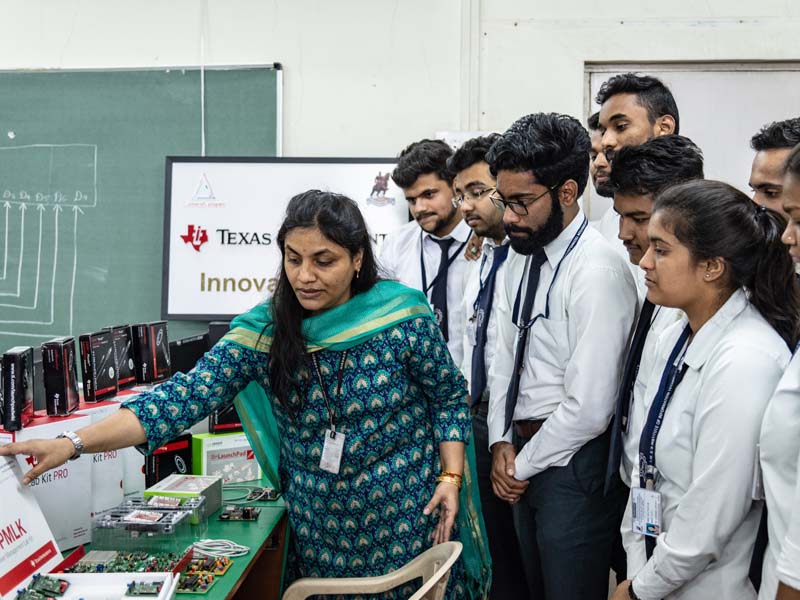
C411.1 Use different electronic components and sensors/transducers to provide practical solution to real life problems.
C411.2 Design/model/simulate/and fabricate a prototype
C411.3 Designing and implementation of mini project which includes measurement of parameter signal processing, controlling, debugging related to objectives defined in the problem statement.
C411.4 Prepare the project report


THIRD YEAR (Semester V)    
SUBJECT: Intellectual Property Rights
Course Outcomes: Students will be able to
C501.1 Describe the significance of intellectual property
C502.2 Discuss various aspects of patents
C503.3 Search patent information in database
C504.4 Explain patents documents and process for examination
C505.5 Describe concepts related to trademarks
C506.6 Differentiate copyright from patent
SUBJECT: Industrial Automation
Course Outcomes: Students will be able to
 C502.1 Understand the fundamentals of PLC, PLC interfacing and HMI.
C502.2 Develop HMI/SCADA system for given applications.
 C502.3 Describe the software and hardware DCS configuration.
 C502.4 Explain DCS operation and integration.
 C502.5 Develop FBD program for automation and explain advanced techniques in DCS.
 C502.6 Explain various DCS applications.
SUBJECT: Modern Control Theory
Course Outcomes: Students will be able to
C503.1 Construct state space models and represent dynamic systems
C503.2 Analyze control systems using eigenvalues and eigenvectors
C503.3 Evaluate controllability, observability, and stability
C503.4 Design control systems using state space
C503.5 Understand and work with sampled data control systems
C503.6 Analyze sampled data control systems
SUBJECT: Digital Signal Processing
Course Outcomes: Students will be able to
C504.1 Classify the signals and systems.
C504.2 Apply z transform for signal analysis in frequency domain.
C504.3 Compute the response of discrete-time systems to various input signals
C504.4 Analyze the frequency domain characteristics of Discrete-Time Systems
C504.5 Design IIR filters from appropriate specifications.
C504.6 Select the FIR filter design algorithm as per the filter specifications.
SUBJECT: Web Technology
Course Outcomes: Students will be able to
C505A.1  Analyze the difference between and PHP and XML
C505A.2 Create web pages using PHP
C505A.3 Design web application using MVC architecture
C505A.4 Understand the concept of JAVA SCRIPTS
C505A.5  Identify the difference between the JSP and Servlet.
C505A.6 Apply JDBC and ODBC technologies to create database connectivity
SUBJECT: Programming Practices JAVA
Course Outcomes: Students will be able to
C505B.1 Write efficient and readable Java code using proper coding conventions and best practices
C505B.2 Apply OOP principles such as encapsulation, inheritance, polymorphism, and abstraction in Java programs.
C505B.3 Perform file handling operations and manage data persistence using serialization.
C505B.4 Develop multithreaded applications to handle concurrency and parallelism in Java.
C505B.5 Establish database connectivity using JDBC to interact with relational databases
C505B.6 Design and implement a real-world Java application, incorporating best programming practices and optimization techniques.
C505B.1 Write efficient and readable Java code using proper coding conventions and best practices
C505B.2 Apply OOP principles such as encapsulation, inheritance, polymorphism, and abstraction in Java programs.
SUBJECT: Biomedical Instrumentation
Course Outcomes: Students will be able to
C505C.1 To understand the anatomy of various systems in human body.
C505C.2 Select and apply the appropriate bioelectrode for measurement of

physiological parameters.

C505C.3 Demonstrate his/her skills by using biomedical equipment’s.
C505C.4 Explain the function of instruments and its working
C505C.5 Learn upcoming technology through continuous learning in biomedical instrumentation field.
SUBJECT: Automation in Production System and Management
Course Outcomes: Students will be able to
C506.1 Illustrate the various automation processes
C506.2 Describe the software and hardware tools for the production processing planning
SUBJECT: Industrial Automation Lab
Course Outcomes: Students will be able to
C507.1 Understand the fundamentals of PLC, PLC interfacing and HMI.
C507.2 Develop HMI/SCADA system for given applications.
C507.3 Describe the software and hardware DCS configuration.
C507.4 Explain DCS operation and integration.
C507.5 Develop FBD program for automation and explain advanced techniques in DCS
C507.6 Explain various DCS applications.
SUBJECT: Modern Control Theory Lab
Course Outcomes: Students will be able to
C508.1 Improved understanding of transient and steady-state behavior of electrical networks
C508.2 Ability to evaluate and compare control system performance
C508.3 Proficiency in root locus analysis for stability assessment
C508.4 Ability to converting between transfer function and state space models
C508.5 Proficiency with state feedback control design
C508.6 Competence in designing state observers and implementing state feedback
SUBJECT: Web Technology Lab
Course Outcomes: Students will be able to
C509A.1 Analyze the difference between and PHP and XML
C509A.2 Understand the concept of HTML
SUBJECT: Programming Practice JAVA Lab
Course Outcomes: Students will be able to
C509B.1 Write efficient and readable Java code using proper coding conventions and best practices
C509B.2 Apply OOP principles such as encapsulation, inheritance, polymorphism, and abstraction in Java programs.
C509B.3 Perform file handling operations and manage data persistence using serialization.
C509B.4 Develop multithreaded applications to handle concurrency and parallelism in Java.
C509B.5 Establish database connectivity using JDBC to interact with relational databases
C509B.6 Design and implement a real-world Java application, incorporating best programming practices and optimization techniques.
SUBJECT: Biomedical Instrumentation Lab
Course Outcomes: Students will be able to
C509C.1 select and apply the appropriate bioelectrode for measurement of

physiological parameters.

C509C.2 demonstrate his/her skills by using biomedical equipment’s.
C509C.3 explain the function of instruments  and its working
THIRD YEAR (Semester VI)    
SUBJECT: Seminar and Technical Paper writing
Course Outcomes: Students will be able to
C601.1 Analyze communication-related problems and improve communication skill.
C601.2 Use various types of technical communication as per need
C601.3 Write proposals and reports
C601.4 Develop key skills in research, dissemination and documentation
SUBJECT: Industrial Data Exchange
Course Outcomes: Students will be able to
C602.1 Differentiate various network components and network topologies.
C602.2 Identify OSI-ISO, TCP/IP network models.
C602.3 Explain the architecture, applications, advantages and limitations of HART, Foundation Fieldbus and ProfiBus protocols.
C602.4 Explain the architecture, applications, advantages and limitations of Ethernet and OPC protocols.
C602.5 Explain the architecture, applications, advantages and limitations of Device Net, Control Net, BacNet protocols.
C602.6 Explain the types and need of network diagnostic and health monitoring tools.
SUBJECT: Industrial Internet of Things
Course Outcomes: Students will be able to
C603.1 Explain the fundamental principles, architecture, and components of IIoT.
C603.2 Analyze sensor data and implement predictive maintenance solutions in IIoT.
C603.3 Identify and mitigate security threats and challenges in IIoT systems.
C603.4 Demonstrate knowledge of industrial standards, regulations, and compliance for IIoT deployment.
C603.5 Develop and implement a functional IIoT solution using hardware, software, and cloud integration.
C603.6 Explore and assess real-world IIoT applications in various industries.
SUBJECT: Project Engineering and Management
Course Outcomes: Students will be able to
C604.1 Evaluate the role and responsibilities in the project.
C604.2 Identify the tools of project planning and  budget .
C604.3 Apply the design documents/ activities required in different phases of the project.
C604.4 Classify the standards required for project development.
C604.5 Interpret the design information from the documents.
C604.6 Implement various construction and testing activities.
SUBJECT: Deep Learning
Course Outcomes: Students will be able to
C605A.1 Describe the basics of deep learning and its applications.
C605A.2 Implement deep neural network.
C605A.3 Apply the technique of Convolution Neural Network (CNN) for implementing deep learning models.
C605A.4 Apply the technique of Recurrent Neural Network (RNN) for implementing deep learning models.
C605A.5 To implement and apply deep generative models.
C605A.6 To describe reinforcement learning process.
SUBJECT: Advance Embedded System Design
Course Outcomes: Students will be able to
C605B.1 Infer the various instruction sets in ARM microcontroller.
C605B.2 Design and implement an advanced embedded system based on an 16/32-bit microcontroller.
C605B.3 Develop software and hardware for embedded systems using ARM microcontroller
C605B.4 Realize microcontroller systems with ARM.
C605B.5 Identify the functionality of development boards to implement ARM embedded
C605B.6 Design and develop real time ARM embedded systems used in industry
SUBJECT: Building Automation
Course Outcomes: Students will be able to
C605C.1 Define and articulate the fundamental concepts of Building Automation Systems (BAS), including its scope, historical development, and key components.
C605C.2 Integrate HVAC systems effectively by applying control strategies and energy management techniques also apply principles of lighting control systems, incorporating daylight harvesting and occupancy sensing.
C605C.3 Identify and define critical comfort parameters, including temperature, humidity, air flow, pressure, and air quality and recognize the significance of maintaining optimal comfort levels in indoor environments.
C605C.4 Select appropriate AHU types based on established criteria and demonstrate an understanding of energy-efficient design principles.
C605C.5 Evaluate and differentiate between centralized and decentralized access control systems.

Demonstrate knowledge of various card technologies, including smartcards, proximity cards, and Mi fare cards.

SUBJECT: Process Instrumentation
Course Outcomes: Students will be able to
C606.1 Discuss the basic operations of Heat Exchanger, Dryer, Evaporator, Boiler, Distillation column, Reactors, Pumps and Compressors and Determine the scaling equations for unit processes and operations.
C606.2 Analysis and design of controller for safety and process monitoring and understand the need for scaling of instruments.
C606.3 Design an appropriate regulatory and servo controller (Feedback, Cascade and Feed forward) for Heat Exchanger, Dryer, Evaporator, Distillation column and Reactor to achieve desired performance.
C606.4 Design an appropriate regulatory and servo controller (Feedback, Cascade, Selective Split range, Anti-surge) for Boiler, Pumps and Compressors to achieve desired performance.
C606.5 Design/Develop, tuning, implementation and simulation of appropriate servo and regulatory controller for a given process using MATLAB Simulink and Estimate the performance measures. (Rise time, Settling time, Overshoot, Integral errors)
SUBJECT: Project Engineering and Management Lab
Course Outcomes: Students will be able to
C607.1 Understand the ISA Symbol and its use.
C607.2 Identify the tools of project planning and budget and Project Scheduling .
C607.3 Apply the design documents/ activities required in Comparative Statement, Purchase Orders .
C607.4 Classify the standards required for project development and cable Scheduling.
C607.5 Interpret the design information from the documents and Prepare the bill of material
SUBJECT: Industrial Internet of Things Lab
Course Outcomes: Students will be able to
C608.1 Explain the fundamental principles, architecture, and components of IIoT.
C608.2 Explore and assess real-world IIoT applications in various industries.
SUBJECT: Deep Learning Lab
Course Outcomes: Students will be able to
C609A.1 Apply the technique of Deep Neural network for implementing Linear regression and classification.
C609A.2 Apply the technique of Convolution (CNN) for implementing Deep Learning models.
C609A.3 Design and develop Recurrent Neural Network (RNN) for prediction.
SUBJECT: Advance Embedded System Design Lab
Course Outcomes: Students will be able to
C609B.1 Infer the various instruction sets in ARM microcontroller.
C609B.2 Design and implement an advanced embedded system based on an 16/32-bit microcontroller.
C609B.3 Develop software and hardware for embedded systems using ARM microcontroller
C609B.4 Realize microcontroller systems with ARM.
C609B.5 Identify the functionality of development boards to implement ARM embedded
C609B.6 Design and develop real time ARM embedded systems used in industry
SUBJECT: Building Automation Lab
Course Outcomes: Students will be able to
C609C.1 Define and articulate the fundamental concepts of Building Automation Systems (BAS), including its scope, historical development, and key components.
C609C.2 Integrate HVAC systems effectively by applying control strategies and energy management techniques also apply principles of lighting control systems, incorporating daylight harvesting and occupancy sensing.
C609C.3 Identify and define critical comfort parameters, including temperature, humidity, air flow, pressure, and air quality and recognize the significance of maintaining optimal comfort levels in indoor environments.
C609C.4 Select appropriate AHU types based on established criteria and demonstrate an understanding of energy-efficient design principles.
C609C.5 Evaluate and differentiate between centralized and decentralized access control systems.

Demonstrate knowledge of various card technologies, including smartcards, proximity cards, and Mi fare cards.

C609C.6 Evaluate case studies on energy optimization, identifying successful examples and associated challenges.
SUBJECT: Mini Project
Course Outcomes: Students will be able to
C610.1 Planning and implementation of hardware/ software project
C610.2 Prepare the budget for hardware requirement.
C610.3 Demonstrate the project.
C610.4 Work as a team member.
SUBJECT: Foreign Language German Level II
Course Outcomes: Students will be able to
C6ACA.1 Develop reading, writing and listening skills.
C6ACA.2 Use tenses in German Language.
C6ACA.3 A Develop interest to pursue a German language course.
C6ACA.4 Get an comprehensive understanding of basic German Language and build a good enough vocabulary to articulate themselves in any given daily life situation.
SUBJECT: Foreign Language Japanese Level II
Course Outcomes: Students will be able to
C6ACB.1  Demonstrate basic communication skills.
C6ACB.2  Describe their daily routines in Japanese.
C6ACB.3  Describe things, people, and places using appropriate adjectives.
C6ACB.4  Express the existence or presence of a thing or a person in different contexts.